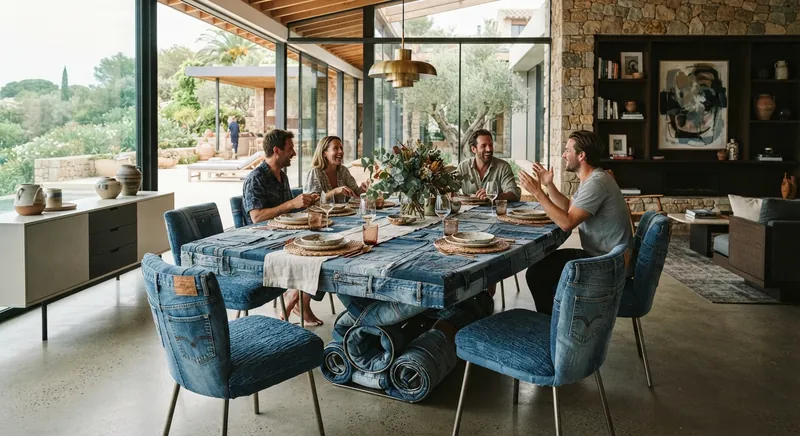
The Jinner Table
$6,900
Seats eight · 61 pairs · Rolled-denim pedestal
Complimentary white-glove delivery on orders above $2,000 · Every seam inspected twice
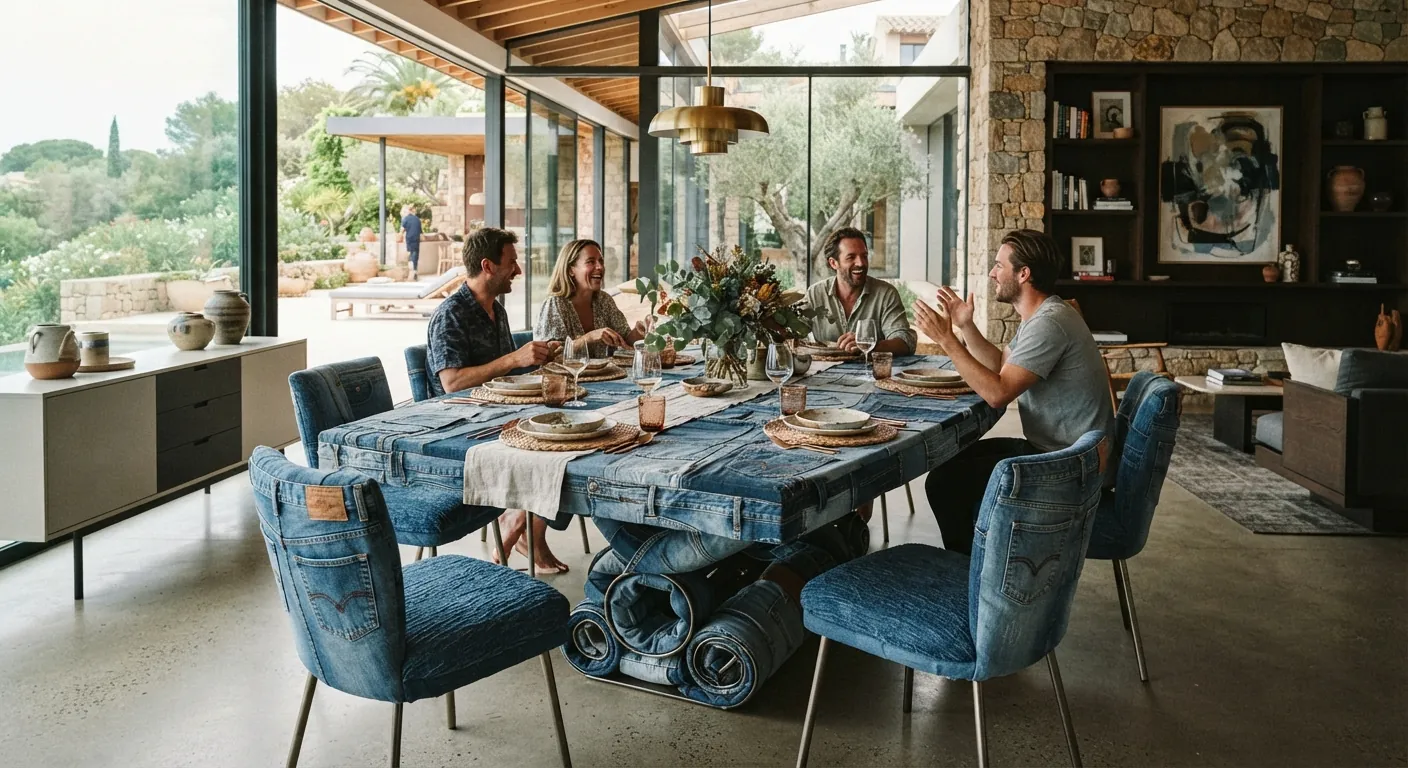
Dedicated studio photography for this piece is in production.
Dining
A chair that drops nineteen millimetres over dinner is not a chair.
$1,140 each
Sold singly. Most tables take six or eight.
Denim stretches, and it stretches most under sustained warm load, which is a technical description of a person eating a long lunch. The Jair seat is cut on the bias over a woven jute stabiliser, which is the arrangement we arrived at after discovering how far the first version sank — and, more importantly, over what period.
Development
We had six prototype Jairs and a staff Christmas lunch, and we measured seat height before anyone sat down because we measure most things. Four hours later we measured again. The seats had dropped nineteen millimetres — not a failure, nothing had torn, but nineteen millimetres is roughly the difference between a dining chair and a low chair, and everyone at that table had spent the afternoon slowly and unknowingly sinking. The bias cut and the jute scrim came out of that lunch. Current settle is two millimetres, permanent, in month one.
Cut along the warp, denim barely stretches at all in one direction and gives generously in the other, which is exactly wrong for a seat: it means the fabric elongates front-to-back while staying rigid side-to-side, and the seat becomes a hammock. Cut on the true bias, at forty-five degrees, it gives evenly in every direction and gives very little of it.
The cost of the bias cut is waste. You cannot nest bias panels efficiently, so a Jair uses seven pairs where a straight-cut chair would use four. That is most of the difference between our price and the price a customer expects to pay for a dining chair, and it is the honest answer whenever we are asked.
Ownership
Questions we are asked
Two millimetres in the first six months, and then it stops. The first prototype dropped nineteen millimetres in a single afternoon, which is how we learned to cut these on the bias.
The bias cut cannot be nested efficiently, so a Jair consumes seven pairs where a straight-cut seat would use four. Nearly all of the price difference is that waste, and we would rather explain it than hide it in a materials line.
No. Denim wears through at the elbow faster than anywhere else on a chair, and an armed Jair would need re-covering roughly every two years. We took it out of the range in 2022.
They are graded from the same intake but not from the same run, and they will not match exactly. Two years in they will be closer than they are on day one, because the table is sealed and the chairs are not.
You can, and it defeats the bias cut, and the seat will then behave like a chair we spent six months not building. We would rather you told us the seat was uncomfortable and let us look at it.
Pairs with
$6,900
Seats eight · 61 pairs · Rolled-denim pedestal
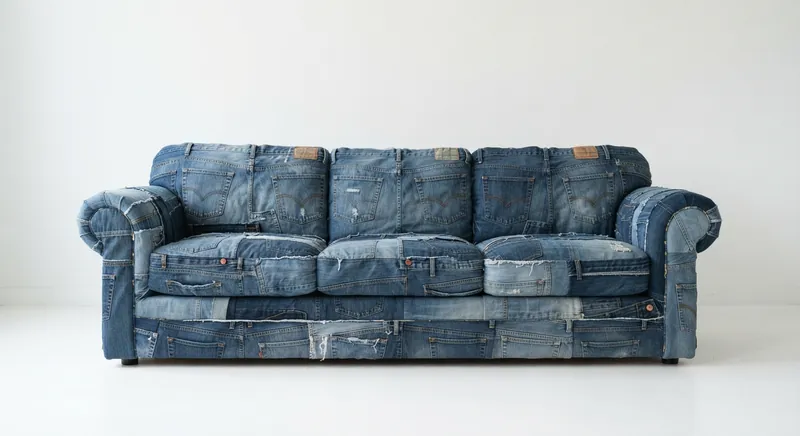
$4,280
Three-seat sofa · 41 pairs · Kiln-dried ash frame
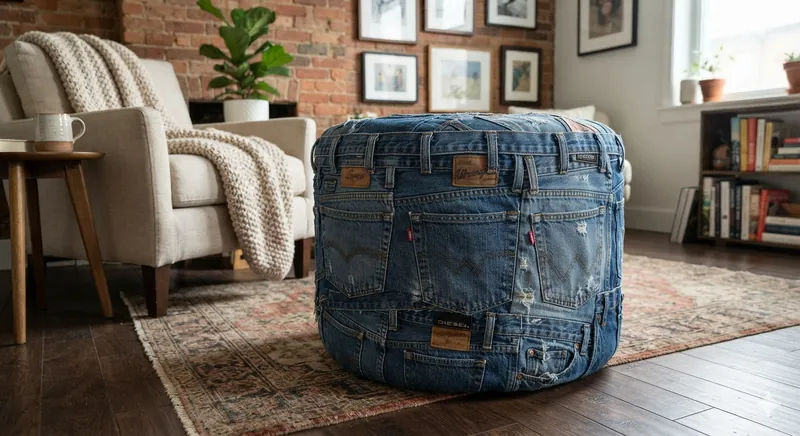
$980
Round pouf · 14 pairs · Waistbands intact